Foreign Media Reports: DeepSeek User Rate Drops to 3%
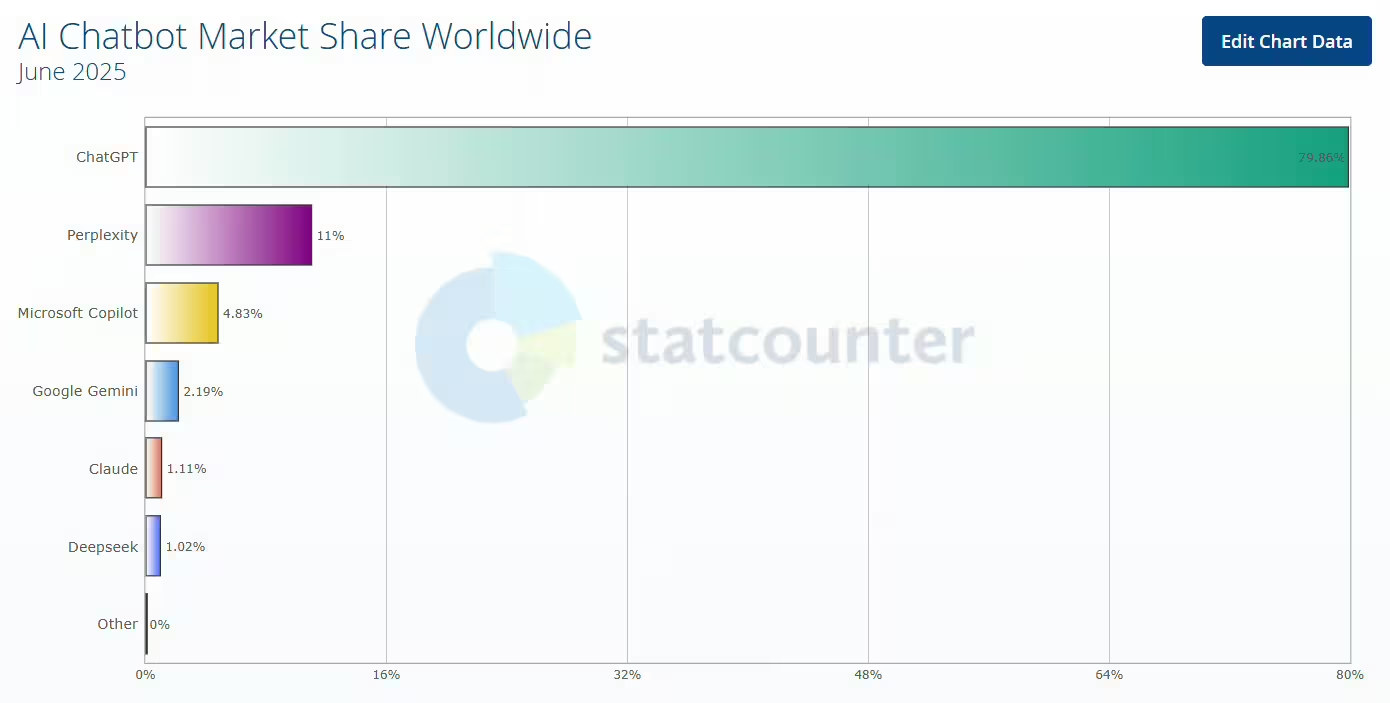
Recently, a foreign media report claimed that DeepSeek, a major Chinese AI large language model (LLM), saw its user rate plunge from an impressive 94% to a mere 3%. Even more shocking, global market share reportedly dipped to just 1%. At first glance, the numbers suggest a dramatic downfall—but the truth is far more nuanced.
It’s Not a Collapse — It’s Platform-Level Diversification
While the raw numbers seem alarming, they don’t tell the full story. DeepSeek’s core technology hasn’t declined; instead, its direct usage visibility has changed.
In the early days, users accessed DeepSeek directly via its website or API. But now, a growing number of platforms and devices are integrating DeepSeek in ways that users no longer see it by name. These include:
- Lingxi, YuanYu AI, Zhihu Answers, Doubao, Weibo Smart Search
- Built-in AI systems in smartphones (like Xiaomi’s Surge OS AI, MagicOS by Honor, etc.)
- In-car infotainment systems and IoT devices
As a result, while individual users may no longer realize they’re using DeepSeek, they actually are—just indirectly.
From Brand to Backend: The Invisible Expansion
DeepSeek is quietly shifting from being a consumer-facing product to a back-end AI engine that powers other apps and platforms.
| Then (Direct Usage) | Now (Integrated Use) |
|---|---|
| Users accessed DeepSeek directly | Users interact via 3rd-party apps |
| Brand visibility was high | Model brand often invisible |
| Niche tech audience | Mass adoption via ecosystems |
So, while the visible user base has shrunk, DeepSeek is still very much in use, just embedded into other services.
AI in China: Moving Beyond the Brand
This shift reflects a broader trend in China’s AI ecosystem. Companies are moving away from standalone branded AI models and toward broad ecosystem integration.
Many major players now have their own AI models (e.g., Baidu’s Ernie Bot, Alibaba’s Tongyi Qianwen, Moonshot, and more). DeepSeek is becoming a foundational layer, powering multiple front-end experiences across various sectors—from content platforms to smart hardware.
Conclusion: DeepSeek Didn’t Disappear—It Evolved
While media reports show a dramatic user drop, what’s really happening is DeepSeek’s invisible takeover of the backend space. It’s not about how many people visit DeepSeek.com anymore—it’s about how many platforms rely on its engine.
In the world of AI, being invisible doesn’t mean being irrelevant—in fact, it might be the next stage of dominance.