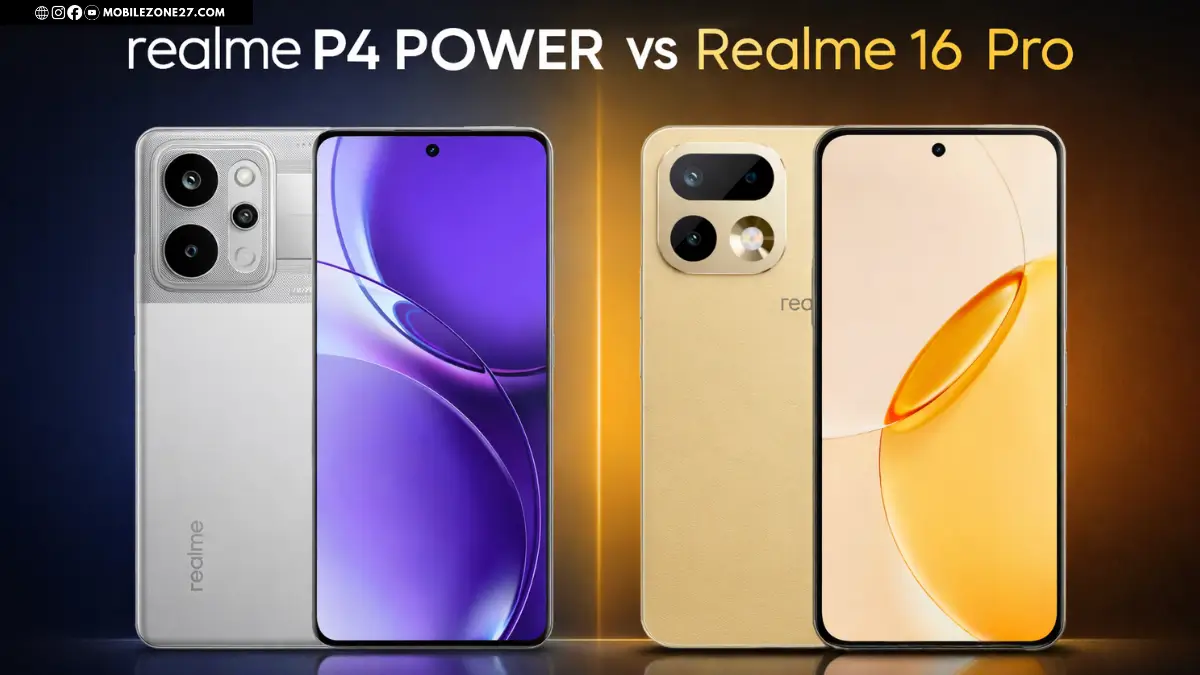
Realme P4 Power vs Realme 16 Pro— Realme has started 2026 with two strong launches that instantly grabbed attention in the mid-range market — the Realme P4 Power 5G and the Realme 16 Pro. At first glance, both phones look like they are competing in the same category: both offer AMOLED displays, 144Hz refresh rate, Dimensity 4nm chipsets, stereo speakers, fast charging, and Android 16 out of the box.
But once you look closer, it becomes clear that these two phones are built for completely different types of buyers.
The Realme P4 Power is designed for users who want a phone that can last forever on battery, handle rough usage, and still feel smooth in performance. On the other side, the Realme 16 Pro is aimed at people who want a slimmer, lighter phone with a much stronger camera setup, especially for selfies and content creation.
So if you are confused between the two, you are not alone. The big question is simple:
Realme P4 Power vs Realme 16 Pro : price difference
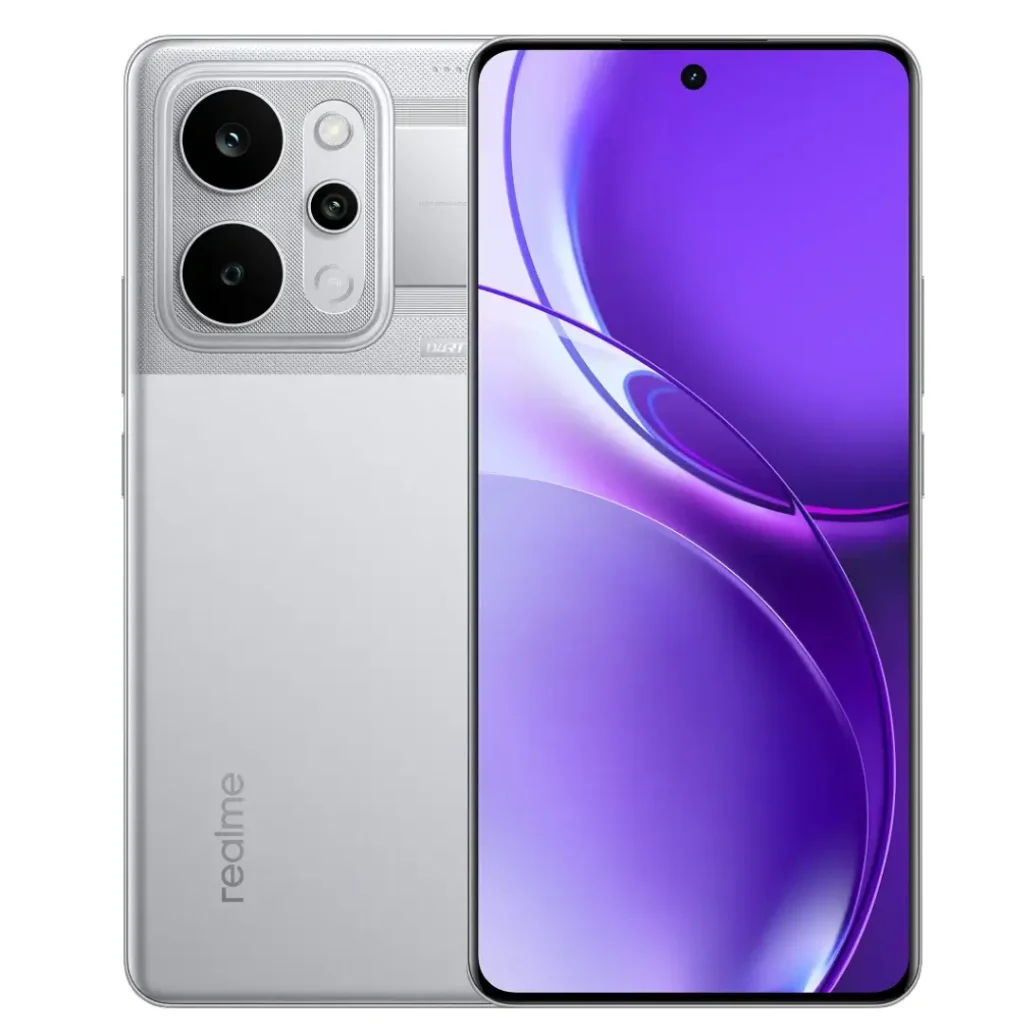
The first difference is pricing, and it tells you a lot about where these phones sit.
Realme P4 Power price: ₹25,999
Realme 16 Pro price: ₹31,999
Now yes, prices can vary depending on region and offers, but the positioning is clear. The Realme P4 Power is meant to be a value-focused phone for buyers who want maximum features under a tighter budget. The Realme 16 Pro sits slightly higher and feels like a more premium mid-range option.
This pricing gap is also important because it affects expectations.
If you are spending ₹33K, you naturally expect better cameras, better in-hand feel, and a more premium experience. That is exactly what the Realme 16 Pro is trying to deliver. Meanwhile, the P4 Power is trying to deliver something different: battery life that most phones cannot match.
What you get in Realme P4 Power and Realme 16 Pro
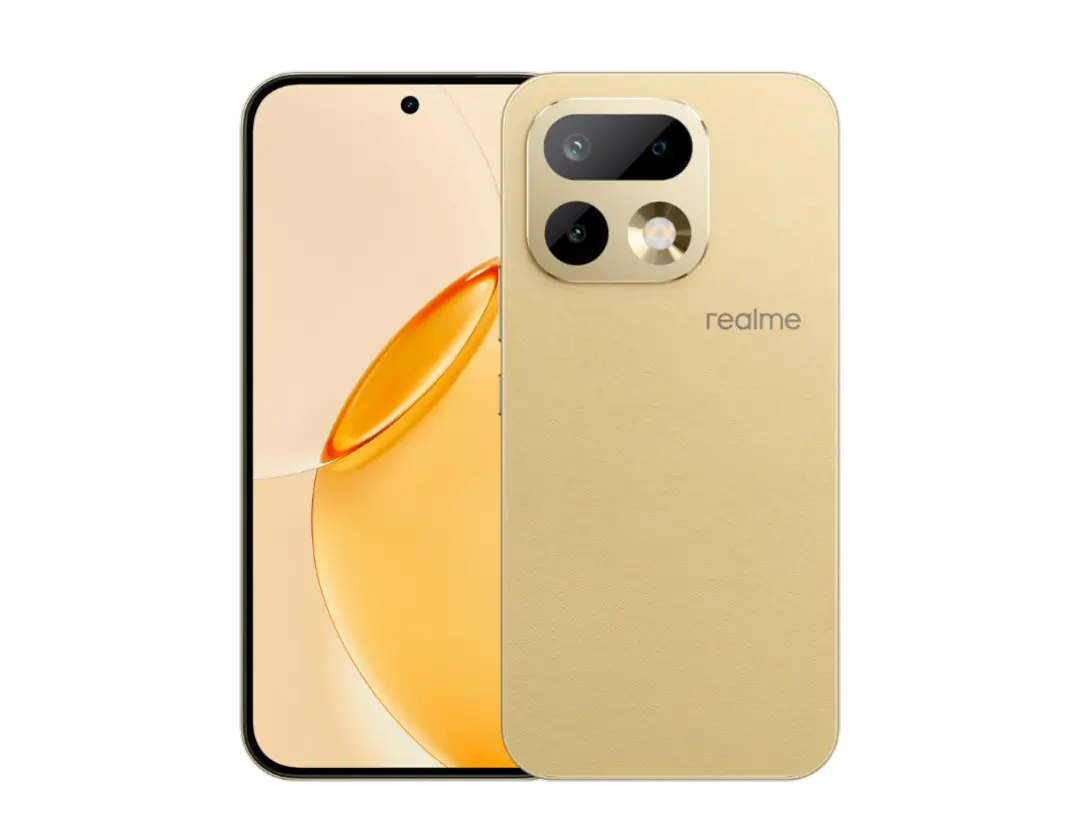
Before we go deep into comparisons, let’s quickly understand what each phone is really offering as its main highlight.
The Realme P4 Power is focused on:
✅ 1) A massive 10001mAh battery
✅ 2) Dimensity 7400 Ultra (4nm) performance
✅ 3) Rugged durability with IP69 + MIL-STD-810H
The Realme 16 Pro is focused on:
✅ 1) A 200MP main camera with OIS
✅ 2) A premium slim design that feels lighter
✅ 3) A 50MP selfie camera with 4K front video
So yes, both are strong, but the “main reason to buy” is different. And this is exactly why the comparison becomes interesting.
Design and in-hand feel: heavy battery phone vs slim premium phone
Let’s talk about the design because it matters more than people think.
The Realme P4 Power is a big phone. It weighs 219 grams and is 9.1mm thick. That is not necessarily a bad thing — it is the price you pay for a 10001mAh battery. Realme has used a glass front protected by Corning Gorilla Glass 7i, while the frame and back are plastic.
In daily use, the P4 Power will feel like a solid device, but yes, you will feel the weight in your hand. If you use your phone for long scrolling sessions or one-handed use, the weight might bother you a little.
The Realme 16 Pro feels more premium in comparison. It weighs 192 grams and is only 7.8mm thick, which makes it noticeably slimmer. It also offers a silicone polymer back (eco leather) option, which many people prefer because it gives better grip and a premium touch.
So if you want a phone that feels light and premium, the Realme 16 Pro clearly wins here. But if you don’t mind a heavier phone and want maximum battery, the P4 Power’s design makes sense.
Durability: both are tough, but Realme P4 Power has a rugged personality
One of the most underrated parts of this comparison is durability.
The Realme P4 Power comes with:
IP69 dust and water resistance
protection against high-pressure water jets
water resistance up to 1.5m for 30 minutes
MIL-STD-810H compliance
This is a rare combination in this segment. The MIL-STD tag does not guarantee extreme ruggedness, but it does show that Realme is marketing this phone as a tougher device.
The Realme 16 Pro also has strong durability:
IP68/IP69K
water resistance up to 2m for 30 minutes
So technically, the 16 Pro can survive deeper water. But the P4 Power has a more rugged overall branding because of the MIL-STD rating.
In real life, both phones should survive rain, dust, and accidental splashes easily. But if you are the kind of user who uses the phone roughly or works outdoors, the Realme P4 Power feels like the safer choice.
Display: flagship-level smoothness on both phones
This is one area where Realme has done a great job on both devices.
The Realme P4 Power offers a 6.8-inch AMOLED display with:
144Hz refresh rate
HDR10+ support1B colors
PWM dimming
600 nits typical brightness
1800 nits HBM brightness
6500 nits peak brightness
Gorilla Glass 7i protection
The Realme 16 Pro offers a 6.78-inch AMOLED display with:
144Hz refresh rate
HDR10+ support
1B colors
PWM dimming
1000 nits typical brightness
1400 nits HBM brightness
6500 nits peak brightness
Now what does this mean in daily use?
Both phones will feel extremely smooth. Scrolling is buttery, animations feel fast, and gaming becomes more enjoyable. The peak brightness is the same on both phones, so both will handle outdoor usage well.
The only difference is that the Realme 16 Pro has higher typical brightness, while the P4 Power has higher HBM brightness. But in real-world use, you will not feel a huge difference.
So yes, display quality is a strong point on both phones, and neither one is a weak choice.
Performance: Dimensity 7400 Ultra vs Dimensity 7300 Max
Now let’s talk about performance, because this is where buyers usually care a lot.
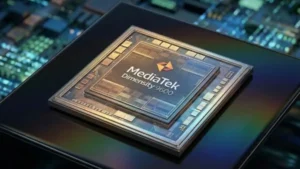
The Realme P4 Power comes with the MediaTek Dimensity 7400 Ultra (4nm).
CPU: 4×2.6GHz Cortex-A78 + 4×2.0GHz Cortex-A55
GPU: Mali-G615 MC2
The Realme 16 Pro comes with the MediaTek Dimensity 7300 Max (4nm).
CPU: 4×2.5GHz Cortex-A78 + 4×2.0GHz Cortex-A55
GPU: Mali-G615 MC2
Both are modern 4nm chips, which means they are efficient and should handle heat better than older mid-range processors.In daily use,
For gaming, the Realme P4 Power has a slight advantage because the performance cores are clocked a little higher. The difference is not massive, but for heavy gaming sessions, the P4 Power may feel slightly more stable.
However, it is also worth remembering that gaming performance is not only about the chipset. It also depends on software optimisation, thermal design, and sustained performance. But based on raw specs alone, the P4 Power has the edge.
ALSO READ — REDMI K90 Ultra May Bring Gaming-Phone Cooling Without Losing IP68 Rating
Storage and RAM: no difference here
This part is simple because both phones offer the same memory setup.
You get:
128GB + 8GB RAM
256GB + 8GB RAM
256GB + 12GB RAM
UFS 3.1 storage
No microSD card slot
So storage speed and app loading performance should be similar.
This means you do not have to worry about one phone being slower in storage performance.
Camera: this is where Realme 16 Pro wins clearly
Now comes the part where most buyers care a lot — camera.
The Realme P4 Power offers:
50MP main camera (OIS)
8MP ultrawide (112°)
Color spectrum sensor
LED flash
HDR and panorama
Video: 4K@30fps, 1080p up to 240fps
Selfie: 16MP
Selfie video: 1080p@30fps
This is a decent camera setup. The main camera has OIS, which is good because it improves stability in videos and helps in low-light shots. The ultrawide is also useful for travel and group photos.
But the Realme 16 Pro offers a much stronger setup:
200MP main camera (OIS)
1/1.56″ sensor
dual-pixel PDAF
8MP ultrawide (112°)
Video: 4K@30fps, 1080p up to 120fps, HDR video
Selfie: 50MP
Selfie video: 4K@30fps
This is a huge advantage for the Realme 16 Pro.
In real life, the 16 Pro will deliver:sharper photosbetter detail outputbetter selfiesbetter front camera video qualitymore content-creator friendly experienceSo if you care about camera quality, there is no debate — the Realme 16 Pro is the better phone.
The Realme P4 Power camera is not bad, but it is not the phone’s main highlight.
ALSO READ — Realme 16 Launches With Air Design: 7000mAh Battery in Just 183g!
Battery: Realme P4 Power is in a different leaguES
This is the biggest difference between the two phones.
The Realme P4 Power comes with a 10001mAh Si/C battery, while the Realme 16 Pro comes with a 7000mAh Si/C battery.
Now let’s be clear — 7000mAh is already huge. Many flagship phones still offer around 5000mAh. So the Realme 16 Pro already has excellent battery life.
But 10001mAh is simply a different category.
The Realme P4 Power also supports:
80W wired charging
55W PPS
13.5W PD/QC
50% in 36 minutes
27W reverse wired charging
Bypass charging
This means you can charge fast, you can use bypass charging for gaming, and you can even use your phone to charge other devices.
In daily use, the Realme P4 Power should easily last:
1.5 to 2 days for normal users
1 full day even for heavy gamers
long video streaming sessions
long outdoor usage without battery anxiety
So if battery backup is your top priority, the Realme P4 Power is easily the winner.
Charging: both are fast, but P4 Power is more feature-rich
Both phones support 80W fast charging, which is great.
But the P4 Power has more charging flexibility because it supports:
PPS
PD/QC
reverse wired charging
bypass charging
The 16 Pro also supports bypass charging and reverse wired, but the P4 Power clearly focuses more on power users.
Audio and multimedia: both are solid
Both phones include:
stereo speakersno
3.5mm headphone jack
The P4 Power has a loudspeaker test rating of -25.8 LUFS (Very good), which suggests its speakers are quite loud and clear.
For watching content and gaming, both should be enjoyable.
Connectivity: NFC can matter
Connectivity is mostly similar, with both phones offering:
dual-band Wi-Fi
Bluetooth 5.4
GPS + GLONASS + GALILEO + BDS
USB Type-C 2.0
IR blaster
The key difference is NFC:
Realme P4 Power: NFC ❌
Realme 16 Pro: NFC ✅ (region dependent)
If you use NFC for payments or accessories, this matters. Otherwise, most users will not care.
Software: both are future-proof
Both phones ship with:
Android 16
Realme UI 7.0
up to 3 major Android upgrades
This is a strong promise in the mid-range segment and should keep the phones future-ready for years.
ALSO READ — Poco M8 Pro Launches With Snapdragon 7s Gen 4, 6500mAh Battery & 100W Charging
Realme P4 Power vs Realme 16 Pro: which one should you buy?
Now let’s get to the real part.
Why you should buy Realme P4 Power
You should buy the Realme P4 Power if:
✅ you want the best battery life under this budget
✅ you want slightly stronger performance
✅ you want a rugged phone with IP69 + MIL-STD
✅ you want a phone that feels like a “safe all-rounder”
✅ you don’t care about having the best camera
The P4 Power is a phone that is made for people who hate charging their phone again and again.
Why you should buy Realme 16 Pro
You should buy the Realme 16 Pro if:
✅ you want the best camera setup
✅ you want better selfies and 4K front video
✅ you want a slimmer and lighter phone
✅ you want a more premium in-hand feel
✅ you want NFC Support
The 16 Pro is clearly the better phone for photography lovers and content creators.
Final Verdict: which one is better?
Here’s the simplest verdict, with no confusion:
✅ Buy the Realme P4 Power if your priority is battery, durability, and slightly better performance.
✅ Buy the Realme 16 Pro if your priority is camera quality, selfies, and premium design.
Both phones are excellent, but they are made for different users.
source 1
source 2