


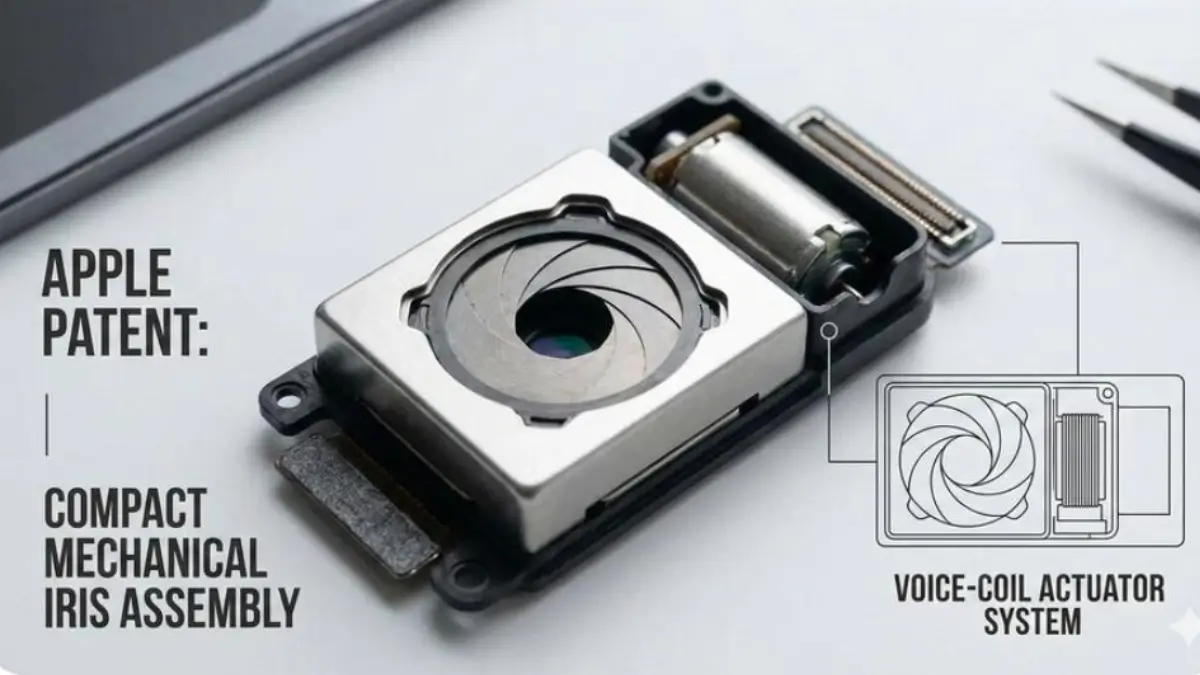
Big news for mobile photography enthusiasts. Apple has been granted a new camera patent that could fundamentally change how smartphone cameras work. At its core is a miniature mechanical aperture system, engineered specifically for ultra-thin mobile devices — something the industry has struggled to achieve for years.If this technology makes it into a commercial product, the iPhone 18 Pro is widely expected to be the first device to showcase it.
For decades, smartphones have relied almost entirely on fixed-aperture lenses. Not because brands didn’t want variable apertures — but because traditional mechanical aperture systems are:
Too large
Too complex
Too power-hungry
They simply don’t fit inside a slim smartphone chassis.
Apple’s newly granted patent directly tackles this limitation by redesigning the mechanical aperture at a microscopic scale, without compromising precision or reliability.

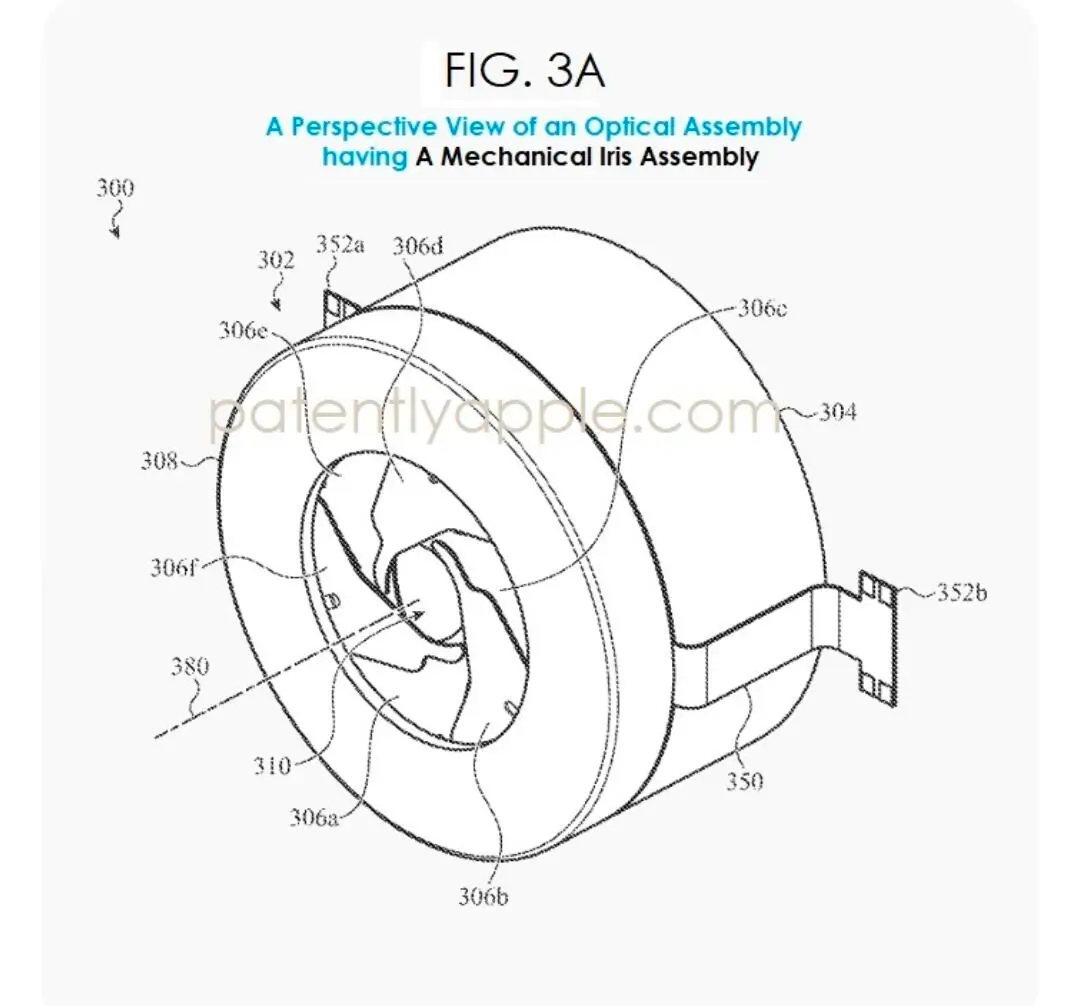
Inside Apple’s Mechanical Aperture Design
The patented system features a compact yet sophisticated structure consisting of:
A stator and rotor assembly
Multiple aperture blades
A voice coil motor (VCM) drive system
What makes this design unique is how Apple transmits electrical current. Instead of conventional wiring, the system uses spring-based current transmission between moving and stationary components. This avoids the thickness, durability, and mechanical constraints associated with traditional wiring inside moving camera parts.
The result is a true mechanical variable aperture, engineered specifically for the tight internal space of a smartphone.
How It Works
At the heart of the system is a rotor fitted with a VCM coil, positioned within a magnetic field generated by stator magnets. When current flows through the coil via the spring system:
1. The rotor rotates under magnetic force
2. This rotation precisely opens or closes the aperture blades
3. The lens achieves multiple aperture sizes — including a fully closed state
The design is flexible enough to work in single or multi-camera setups, making it suitable for wide, ultra-wide, and telephoto modules alike.
Precision, Durability, and Long-Term Reliability
Apple’s patent goes beyond basic mechanics. It also outlines several optional enhancements aimed at long-term use inside a phone:
1. Ball bearings for smoother, low-friction rotation
2. Flexible circuits for improved electrical reliability
3. Integrated position sensors for closed-loop, high-precision aperture control
These details signal Apple’s focus on professional-grade consistency, not just a flashy feature.
Advantages Over Current iPhone Camera Systems
1️⃣ True Variable Aperture in a Smartphone Body
Current iPhones primarily use fixed apertures, with limited dual-aperture switching in select models. This patent enables continuous aperture adjustment, offering better low-light performance, exposure control, and depth-of-field flexibility.
2️⃣ Compact and Power-Efficient Design
The spring-based current transmission reduces mechanical complexity and helps keep the camera module thin, while minimizing power consumption.
3️⃣ Greater Optical Freedom Across Multiple Cameras
Each camera module could gain independent aperture control, reducing reliance on software-based exposure tricks and computational fixes.
4️⃣ Higher Image Quality in Challenging Scenes
Mechanical aperture control allows more natural handling of motion blur, highlight clipping, and depth separation — areas where fixed-aperture smartphone cameras struggle most.
5️⃣ A Hardware Path Toward Pro-Level Features
From more realistic optical bokeh to improved macro photography, a mechanical aperture opens the door to imaging characteristics that software simulation still can’t fully replicate.
The Bigger Picture
If Apple brings this technology to market, it won’t be just another camera upgrade. It could represent a shift away from heavy computational dependency and toward real optical control — something photography purists have wanted from smartphones for years.The iPhone camera has evolved dramatically over the past decade. A true mechanical variable aperture could be its next defining leap.


Hasnain Hasan is the founder and lead writer behind this platform. With over 5 years of hands-on experience in the tech industry, he specializes in breaking down the latest trends, tools, and technologies into easy-to-understand content. A part from writing, Hasnain is actively creating and sharing tech-related content on YouTube, Instagram, and X (formerly Twitter), where he connects with a growing audience of tech enthusiasts and learner